UrbanDigital is a fullstack freelance studio focused on AI-powered solutions. We design and build web apps, automate workflows with AI, and run the servers they live on.
Tell us what you want to build. Get in touch.
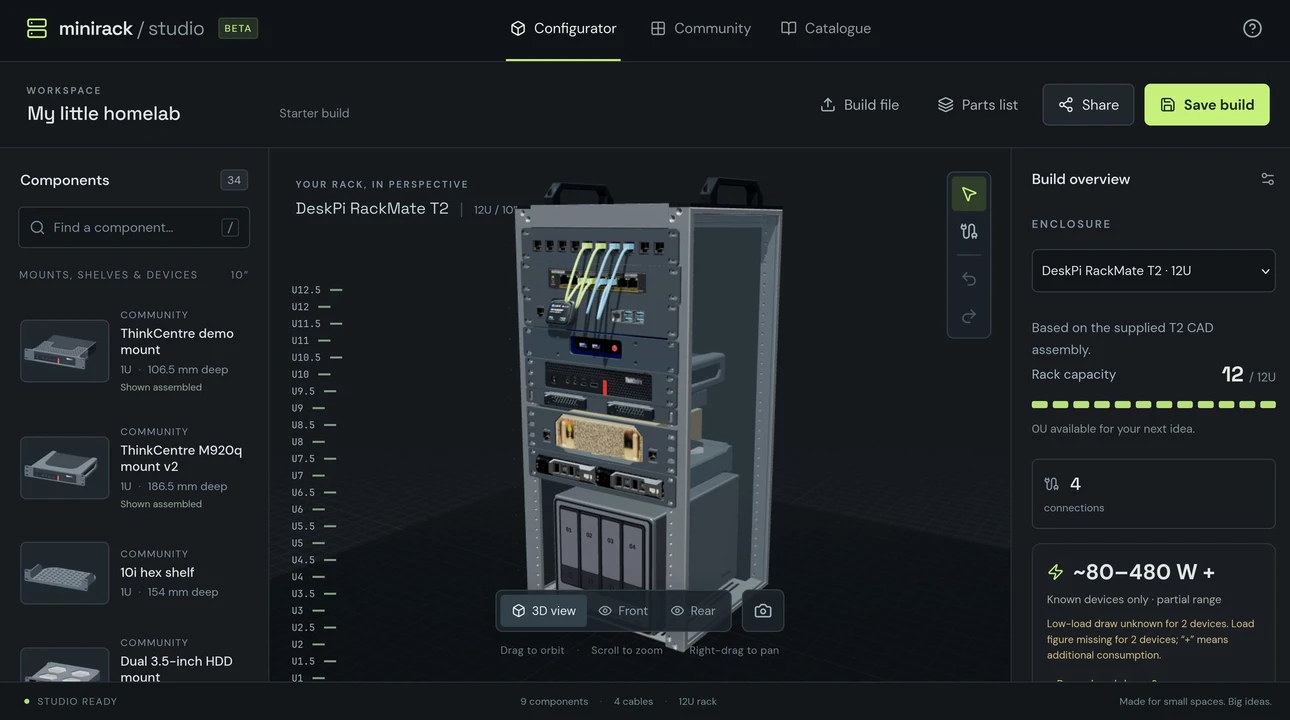
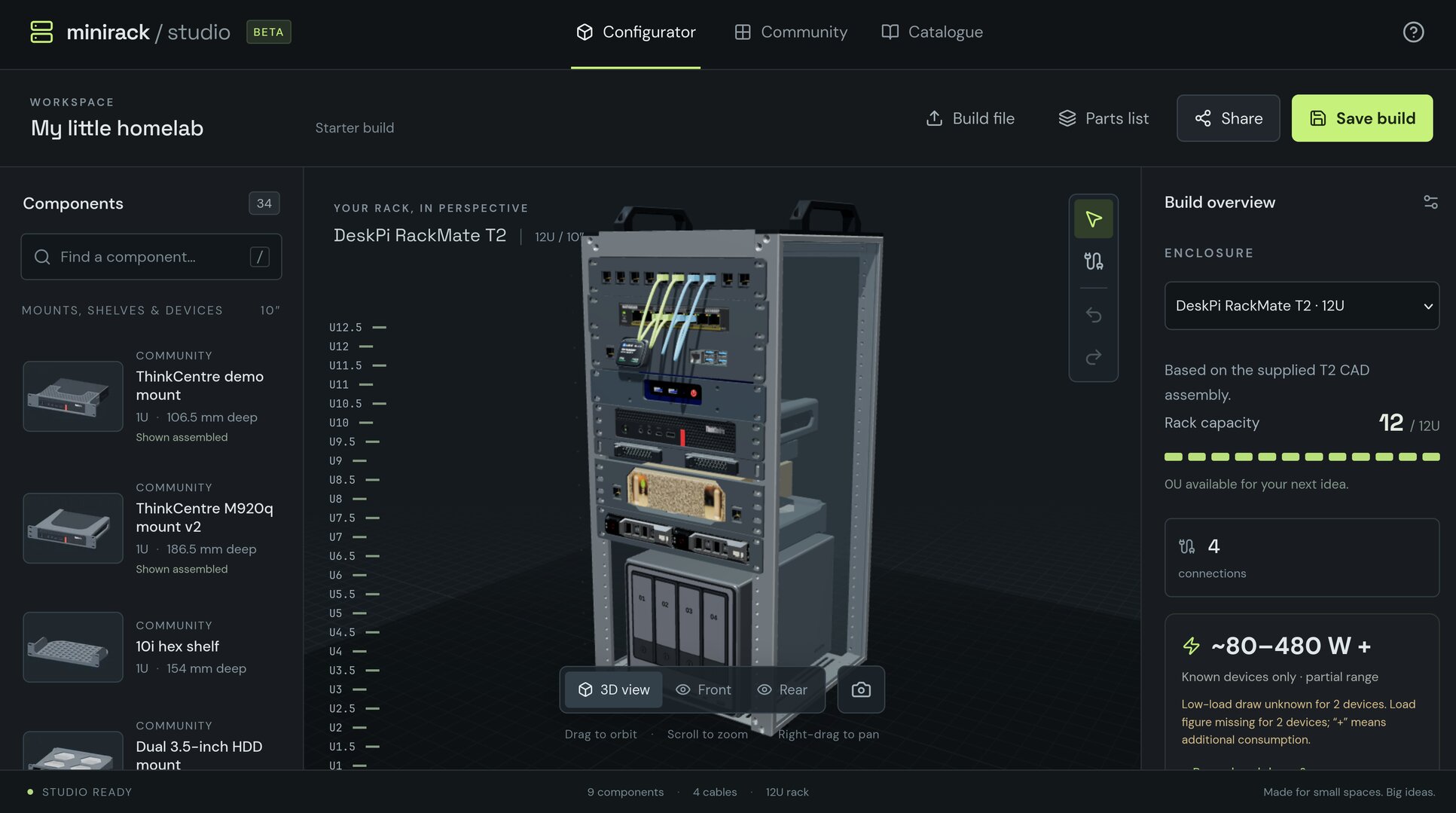
Minirack Studio is a browser-based 3D workbench for planning small 10-inch homelab racks. You pick an enclosure, drop in mini PCs, switches, patch panels and 3D-printed mounts, wire them up, and see the whole build in perspective before you buy or print anything.
10-inch racks have become the default for small homelabs, and most of the mounting hardware is community designed and 3D printed. Planning a build usually means a spreadsheet, a stack of Printables links and a lot of guessing about depth and clearance. We wanted one place where you can lay out a rack visually, check that things fit, and hand someone a link that shows exactly what you built.
The front end is React and TypeScript with Three.js through React Three Fiber, bundled with Vite. A small Go service serves the app and a JSON API, and stores builds in SQLite. The whole thing ships as one Docker image behind Traefik.
There are no accounts. Saving a build returns a random public ID and a separate 256-bit edit token, and only a hash of that token is stored. Anyone with the view link can look, only the holder of the edit link can change it, and builds can optionally be published to a public gallery.
Minirack is live at minirack.cc with a growing catalogue of modeled hardware and community mounts. It is honest about its limits: the models are visual, not verified mechanical assemblies, power figures separate measured data from adapter limits and unknowns, and printed mounts link back to their source so you can check fit with the original designer.
Planning a web app with a 3D front end, or a tool your community will actually use? Talk to us about webdesign and development.
 previous